It began in a BMW showroom.
I met Duncan at the BMW showroom in Park Lane. He was a BMW salesman. During the conversation he asked what I did. I said, “Music.”
Duncan said he played bass in a band called Tear and invited my wife and me to see them.
So we did.
Ironically, Duncan wasn't there.
“We thought Tear were AWESOME.”
But the band was.
I don't now remember the exact line-up on that particular night. Michelle was a member of Tear, but I don't recall whether she was there that evening. I remember Trevor and Mandy; the exact venue is uncertain too.
What I do remember is the sound. To me, Tear were something like Fleetwood Mac meeting traditional Native American Indian influences.
And Trevor's guitar seemed to be doing everything.
Rhythm section. Bass. Orchestra. Guitar.
My recollection is that I suggested getting a drummer and bassist to take over some of those jobs and let Trevor's guitar be Trevor's guitar. They did. My wife and I became friends with the band as it developed, and I ended up doing a little informal mentoring, representing and helping around the edges — never anything grand or particularly formal.
At an outdoor gig somewhere along the way, a woman came up after Tear had played. She was blown away by them and asked who represented the band. We all looked at each other. My wife and I — or perhaps just me — answered: “We do!” She may have been press, an agent or something similar; that detail has gone. What stayed was the moment. We got on with talking to her while the band got on with packing the gear away.
That was probably as close as the arrangement ever came to a formal announcement.
By 1998 the line-up had developed considerably: Trevor Piggott, Michelle Brisa and Amanda Clark on lead vocals; Paul Skelton on drums and percussion; Tim Connell on bass; and Jethro Baker on pianos and organs. The surviving sleeve of their final recorded work also confirms that Trevor and Michelle both played djembe.
By the time Tear went into Music Works in Brixton to make What's It All For?, my wife and I were also caught up in the move from New Cross to Moor Park. The moving cycle had already fallen through once. At the same time, there was a lot of arguing inside the band and we were increasingly being pulled into it.
We wrote the band a couple-of-page report setting out our recommendations for keeping the in-fighting under control and to a minimum, and told them that we weren't going to be there in the studio. In the role we had drifted into, we ordinarily should have been there. My recollection is that stepping away from those sessions may be why we never received a credit on the CD — but that is my interpretation, not something the surviving artwork can prove.
The archive now holds the complete four-track limited-edition CD What's It All For?, recorded and mixed by Colin Rip at Music Works in Brixton in 1998: What's It All For?, Lonely Rider, Dinner and Rivers Run Dry.
The paths kept crossing.
Tear eventually ended. Duncan later resurfaced in a ukulele trio that I saw play in London. Trevor continued with solo work.
One of those surviving recordings has now resurfaced too: Alive. From memory, it may actually be my favourite Trevor Piggott / Trevor Jones track.
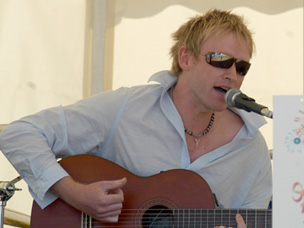
On 15 September 2008, the old paulcruse.com did something new: it featured another artist for the first time. That artist was Trevor.
The surviving page described him as a multi-instrumentalist — guitars, bass, piano, drums and vocals — and hosted five recordings: Riverside, Now Is The Time, State Of My Heart, What Kind Of Love and a live recording of Sleepy.
Then the story moved countries.
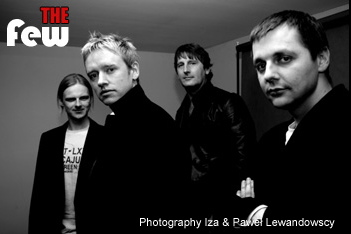
Trevor's solo path eventually led to Poland and The Few, a UK/Polish band.
The old paulcruse.com archive catches them while it was actually happening. In June 2009 it recorded that The Few had made their first video, Castaway, and were due to perform at the Top Trendy Music Festival in Sopot, Poland on 27 June.
My page at the time said they were one of 10 bands selected from more than 350 applications. The surviving archive also lists songs including Castaway, Shine A Light, I Find Me, Waiting For You, Living In Silence and Face The Future.
The Few later came remarkably close to a major-label deal before it fell through at the last moment. I remember the label as possibly Universal, but I no longer regard that detail as certain.
The band changed. The friendship didn't disappear.
After The Few, Trevor returned to solo work as Trevor Jones. Somewhere later in that story came Red Army (Arsenal), a terrace anthem connected with the club he supports. The surviving digital release date doesn't necessarily tell us when it was written, so that part of the chronology stays deliberately loose.
And there is one more crossover.
Trevor appears in the old Honey Tree video, sitting behind my electronic drum kit. He wasn't on the Honey Tree recording. He was simply there, visually, in another part of the story.
Which is rather how this whole thing works.
One BMW salesman. One absent bass player. One band we couldn't forget.
Some things are documents. Some things are memory.
The surviving 2008 and 2009 paulcruse.com pages give this story fixed points: Trevor's early biography and recordings, The Few's line-up, the Top Trendy appearance and the material being promoted at the time.
The recovered 1998 CD has now resolved one old uncertainty: its sleeve credits both Trevor and Michelle with djembe. Other details — the first Tear venue, whether Michelle was present that first night and the identity of the almost-signed label — remain recollections with gaps.
That's fine.
Don't invent the missing bit.