INSTRUMENTAL
The original piece created during the first Music City session.
A cheap late-night studio session. A sleeping child. A song that didn't exist when the session began. And one set of MIDI settings that nobody saved.
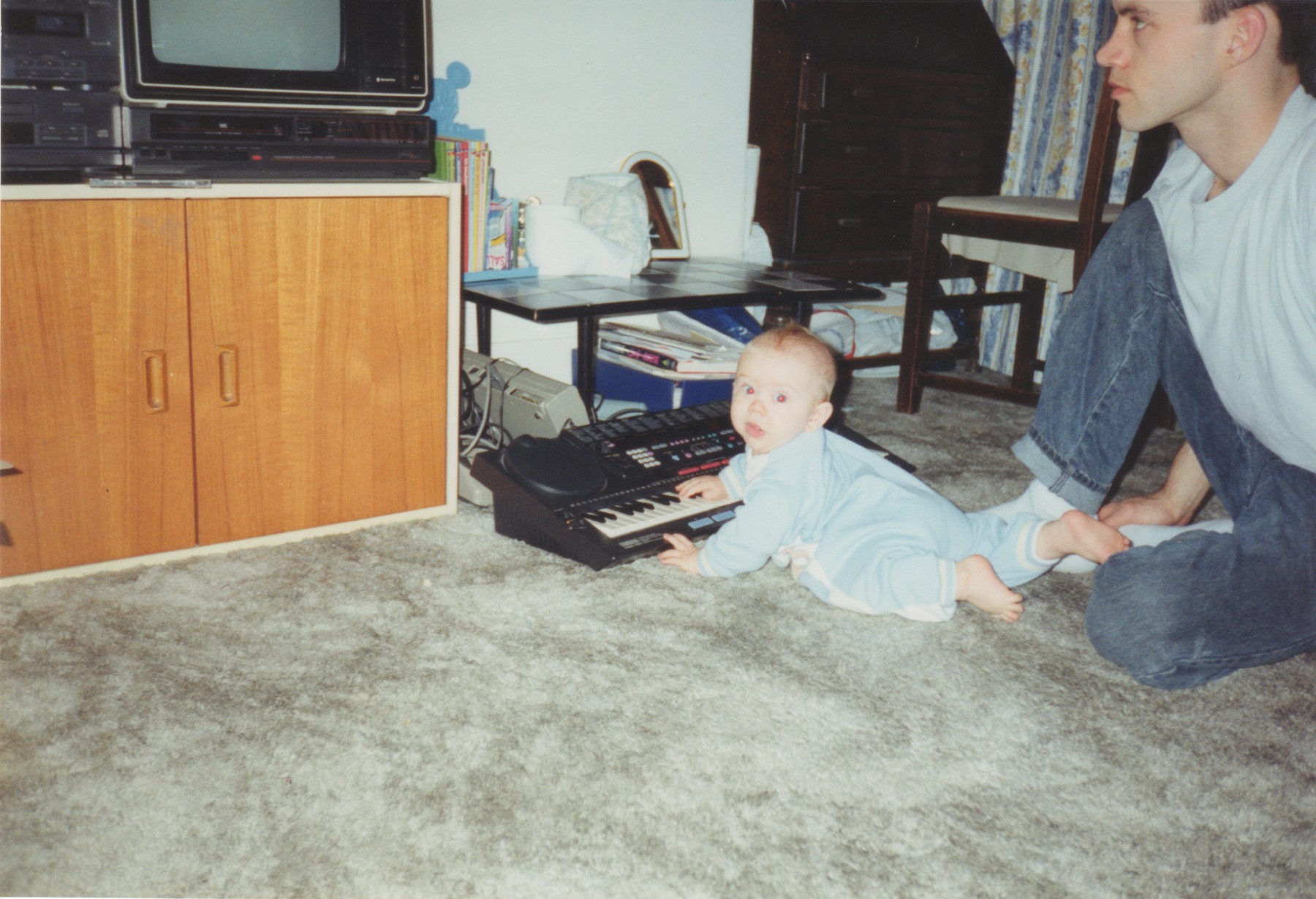
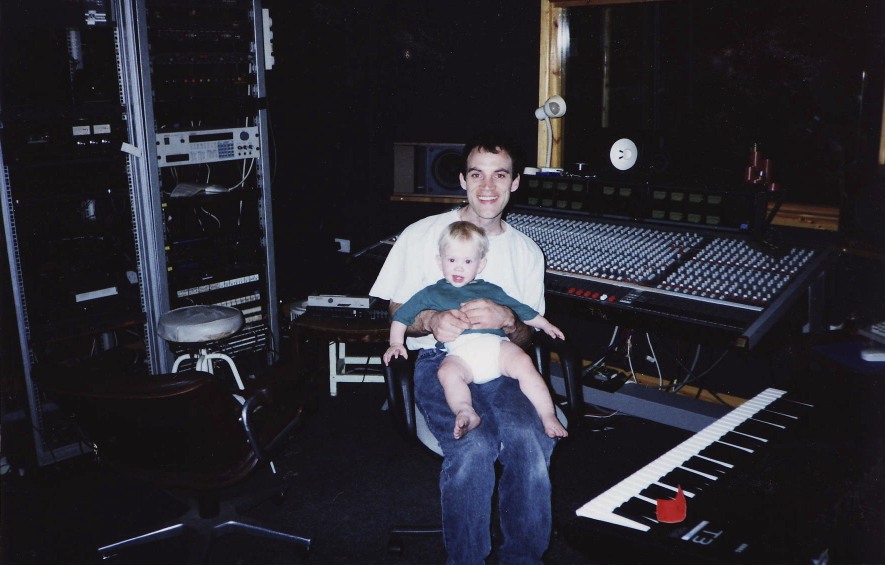
The session was at Music City recording studio, on Paul's road in New Cross. The photograph survives; so does the story of one particular after-midnight session inside it.
Those late hours mattered. Studio downtime was cheaper, which meant recording after midnight could make practical sense even when the rest of New Cross was still very much awake.
Sam was asleep in his pram. Paul pushed him along the noisy Old Kent Road / New Cross Road, the A2, expecting the buses, cars and general London-night racket to wake him.
They didn't.
Paul arrived at Music City with a sleeping child and a studio session ahead of him.
At the studio, Paul put the sleeping Sam in the vocal room. It was quiet, safe, and visible through the glass from the control room.
After sleeping through the traffic outside, that sudden studio silence was apparently a step too far.
Sam woke up.
Paul now had a studio hand for the night.
The purpose of the session was practical: Paul wanted to test the equipment and see what the studio could do.
So he needed something to record.
He wrote War is Over live in the studio, in minutes, and used the newly written piece to put the equipment through its paces.
By the end of the night there was not merely a studio test. There was a song.
Paul returned to Music City to put the vocals down. This time, Sam wasn't with him.
There was also a different engineer.
And then came the problem that changed the history of the recording:
The new engineer could not reproduce the sound of that first after-midnight session. The MIDI setup that had generated it had effectively vanished.
But Paul had something enormously useful: a stereo recording of the original version.
So the vocal could be put over that surviving stereo recording. Meanwhile, the attempt to rebuild the track took on a different character of its own.
The original piece created during the first Music City session.
The later vocal laid over the surviving stereo recording of the original arrangement.
The consequence of trying — and failing — to reproduce the lost MIDI setup with a different engineer.
A song written to test the studio ended up documenting the studio.
Cheap downtime, London traffic, a child awakened by silence, a lost set of settings and an improvised solution are all embedded in the recording's history.
Without the photograph and the story behind it, the catalogue would simply say: three versions.