Nobody posed for this.
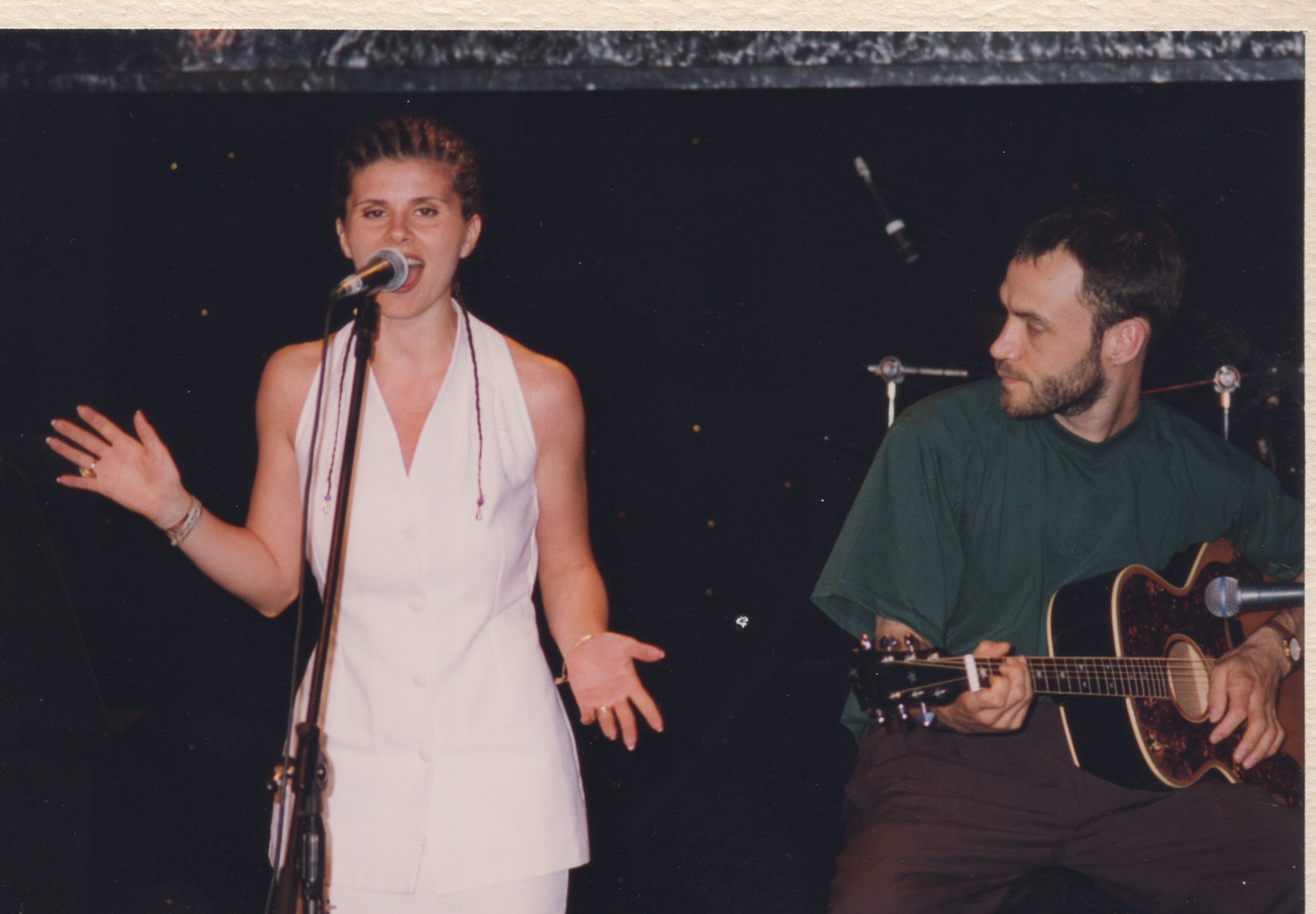
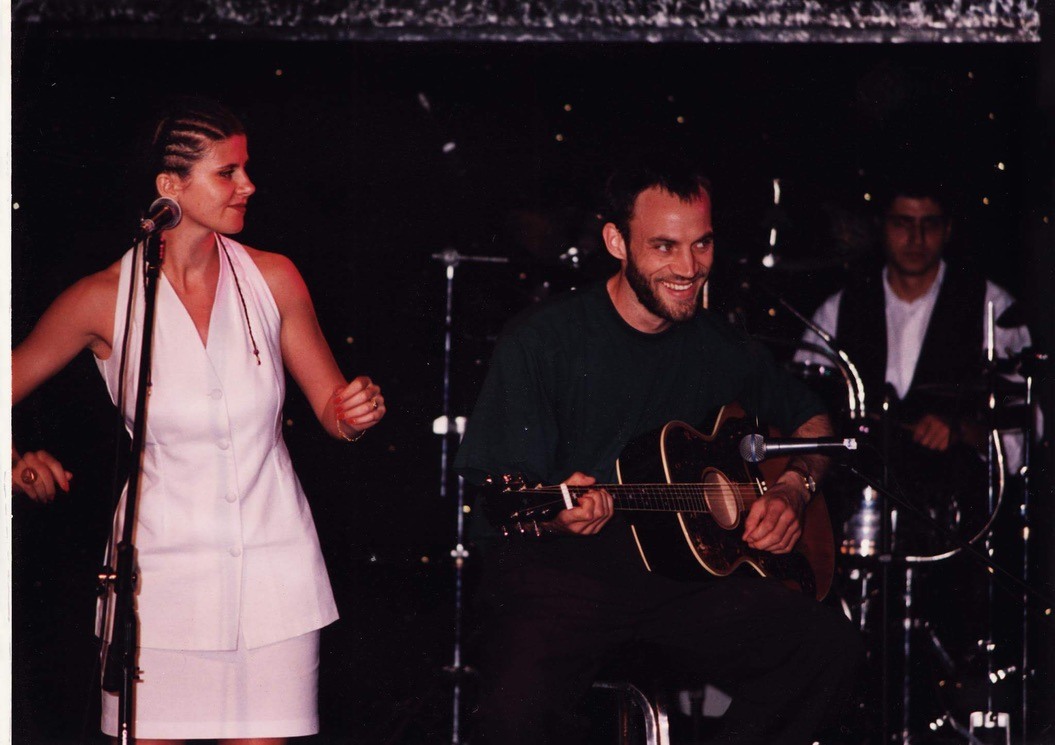
Paul is playing guitar. Romina Cavalaro is beside him. The drummer is behind them. And for a fraction of a second, Romina looks across at Paul.
The camera catches it — and another photograph from the performance catches the exchange from the other direction.
They form an accidental pair: two glances across the same stage, preserved long after the performance itself.
Then the photograph had another life.
Of all the photographs from the performance, this became one of Paul's favourites.
It also became one of his Mum's. She kept a copy of this picture on her windowsill for years.
That changes what the photograph is. It begins as a record of a musical performance, then quietly becomes a family object — something seen every day, long after the sound of the gig has disappeared.
THE WINDOWSILL PHOTOGRAPH
The photographs talk to each other.
Neither picture needs the other to be a good live photograph. Put them together, though, and something else appears.
One catches Paul looking across the stage. The other catches Romina looking towards him. It is almost a shot/reverse-shot assembled by accident from two still photographs.
That is exactly the kind of relationship an archive can reveal when the photographs are allowed to stay connected.
A photograph can outlive the gig.
Sometimes it even finds a windowsill.
Because the archive isn't only about music.
It's about the people who made it, the people who watched it, and the objects that stayed behind afterwards.
This picture happens to contain all three.